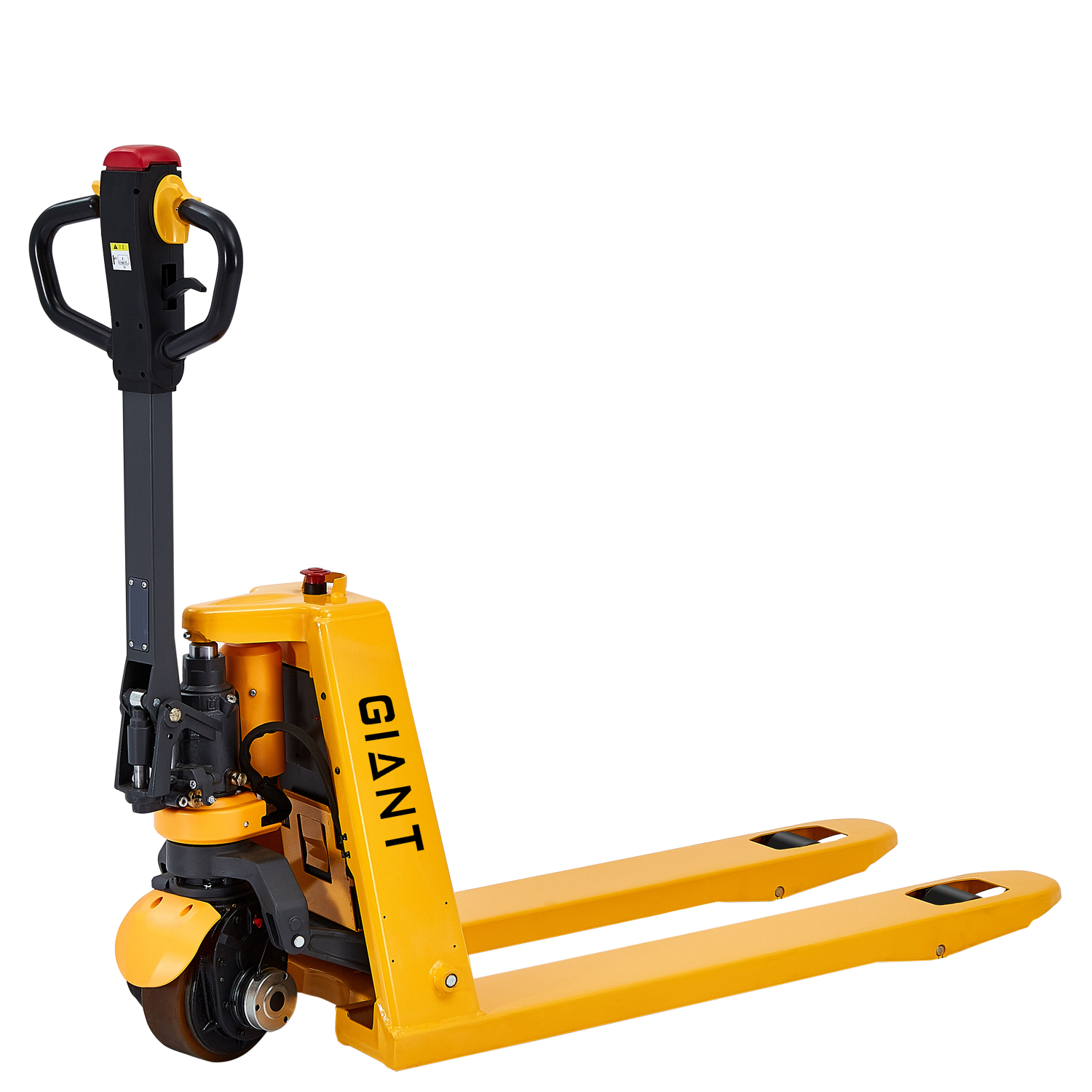
আ বৈদ্যুতিক প্যালেট জ্যাক একটি ব্যাটারি চালিত, মোটরচালিত উপাদান হ্যান্ডলিং ডিভাইস যা একটি বৈদ্যুতিক ড্রাইভ মোটর ব্যবহার করে নিজেকে চালিত করতে এবং প্যালেটাইজড লোড তুলতে একটি চালিত হাইড্রোলিক সিস্টেম ব্যবহার করে, একটি ঐতিহ্যগত হ্যান্ড প্যালেট জ্যাক দ্বারা প্রয়োজনীয় ম্যানুয়াল পুশিং, টান এবং পাম্প-হ্যান্ডেল উত্তোলনের প্রয়োজনীয়তা দূর করে৷ অপারেটর একটি টিলার আর্ম বা কন্ট্রোল হ্যান্ডেল ধরে, থাম্ব-চালিত বোতাম বা একটি টুইস্ট থ্রটল ব্যবহার করে দিকনির্দেশ এবং গতি নিয়ন্ত্রণ করে ইউনিটকে গাইড করে, যখন মেশিনটি লোড চালানো এবং বাড়ানোর সমস্ত যান্ত্রিক কাজ পরিচালনা করে। স্ট্যান্ডার্ড বৈদ্যুতিক প্যালেট জ্যাক মধ্যে লোড উত্তোলন 2,500 এবং 8,000 পাউন্ড এবং লোড করার সময় 3.5 মাইল প্রতি ঘণ্টা গতিতে ভ্রমণ করতে পারে, যা তাদেরকে একই দূরত্বে হ্যান্ড জ্যাক দিয়ে কাজ করা ম্যানুয়াল অপারেটরের তুলনায় প্রতি শিফটে কয়েকগুণ বেশি প্যালেট সরাতে সক্ষম করে (সূত্র: apexmhc.com; globalindustrial.com)। দ বৈদ্যুতিক প্যালেট জ্যাক ক্যাটাগরিতে ওয়াকি মডেল রয়েছে যেখানে অপারেটর ইউনিটের পিছনে হাঁটে, রাইডার মডেল যেখানে অপারেটর জ্যাকের সাথে সংযুক্ত একটি প্ল্যাটফর্মে দাঁড়িয়ে থাকে এবং আধা-ইলেকট্রিক মডেলগুলি যা শুধুমাত্র লিফট ফাংশনটি মোটরাইজ করে এবং ম্যানুয়াল প্রপালশন প্রয়োজন। OSHA স্ট্যান্ডার্ড 29 CFR 1910.178-এর অধীনে, বৈদ্যুতিক প্যালেট জ্যাকগুলিকে ক্লাস III চালিত শিল্প ট্রাক হিসাবে শ্রেণীবদ্ধ করা হয়, প্রশিক্ষণ এবং শংসাপত্রের উদ্দেশ্যে ফর্কলিফ্টের মতো একই নিয়ন্ত্রক বিভাগে রাখা হয় (সূত্র: learntastic.com; oshaeducationcenter.com)। নীচের বিভাগগুলি কভার করে যে মেশিন কীভাবে কাজ করে, একটি নির্বাচন করার সময় যে প্রযুক্তিগত বৈশিষ্ট্যগুলি গুরুত্বপূর্ণ, এটি কীভাবে ম্যানুয়াল এবং ফর্কলিফ্ট বিকল্পগুলির সাথে তুলনা করে, নিরাপত্তা এবং সম্মতির প্রয়োজনীয়তা, ব্যাটারি প্রযুক্তি এবং রক্ষণাবেক্ষণ।
কিভাবে একটি বৈদ্যুতিক প্যালেট জ্যাক কাজ করে
একটি বৈদ্যুতিক প্যালেট জ্যাকের কার্যপ্রণালী তিনটি সমন্বিত বৈদ্যুতিক এবং হাইড্রোলিক সিস্টেমকে একত্রিত করে যা অপারেটর টিলার হ্যান্ডেলের ইনপুটগুলির মাধ্যমে নিয়ন্ত্রণ করে। এই সিস্টেমগুলি কীভাবে ইন্টারঅ্যাক্ট করে তা বোঝা সঠিকভাবে সরঞ্জামগুলি পরিচালনা করতে এবং কর্মক্ষমতা স্বাভাবিক থেকে বিচ্যুত হলে সমস্যাগুলি নির্ণয় করতে সহায়তা করে।
ড্রাইভ মোটর সিস্টেম
ড্রাইভ মোটর ব্যাটারি থেকে বৈদ্যুতিক শক্তিকে ঘূর্ণায়মান গতিতে রূপান্তর করে যা টিলার হ্যান্ডেলের নীচে ইউনিটের পিছনে অবস্থিত একক ড্রাইভ চাকাটিকে ঘুরিয়ে দেয়। যখন অপারেটর থ্রোটল বা দিকনির্দেশক বোতামগুলিকে নিযুক্ত করে, তখন মোটর কন্ট্রোলার ইনপুট পড়ে এবং ড্রাইভ মোটরে সরবরাহ করা বর্তমানকে নিয়ন্ত্রণ করে, যা নির্দিষ্ট গতির মধ্যে স্যুইচ করার পরিবর্তে গতিকে আনুপাতিকভাবে সামঞ্জস্য করে। এই আনুপাতিক নিয়ন্ত্রণটি সীমাবদ্ধ স্থানগুলিতে মসৃণ ত্বরণ এবং লোড বা ডকের কাছে যাওয়ার সময় সুনির্দিষ্ট অবস্থানের অনুমতি দেয়। বেশিরভাগ আধুনিক বৈদ্যুতিক প্যালেট জ্যাকগুলি এসি ড্রাইভ মোটর ব্যবহার করে, যেগুলি বেশি শক্তি-দক্ষ এবং পুরানো ডিসি মোটরগুলির তুলনায় কম রক্ষণাবেক্ষণের প্রয়োজন কারণ তারা এমন ব্রাশ ব্যবহার করে না যা সময়ের সাথে সাথে নষ্ট হয়ে যায়। ড্রাইভ হুইল ইউনিটকে চালিত করে, এবং দুটি লোড বহনকারী কাঁটা সামনের দিকে ছোট লোড চাকা দ্বারা সমর্থিত হয় যা ভ্রমণের দিক অনুসরণ করতে ঘুরতে থাকে।
চালিত লিফট সিস্টেম
উত্তোলন একটি পৃথক বৈদ্যুতিক মোটর দ্বারা সম্পন্ন হয় যা একটি হাইড্রোলিক পাম্প চালায়, যা কাঁটাচামচ বাড়াতে তরলকে চাপ দেয়। যখন অপারেটর লিফ্ট বোতাম টিপে, তখন পাম্প মোটর হাইড্রোলিক সিলিন্ডারে চলে এবং চাপ তৈরি করে যা সংযোগ ব্যবস্থার মাধ্যমে কাঁটাগুলিকে উপরের দিকে ঠেলে দেয়। প্যালেট জ্যাকের জন্য সাধারণ লিফটের উচ্চতা পরিমিত: কাঁটাগুলি নিচু অবস্থানে মেঝে থেকে প্রায় 2.5 থেকে 3 ইঞ্চি উপরে বসে এবং সর্বোচ্চ লিফটে প্রায় 8 ইঞ্চি পর্যন্ত বাড়ায়, যা মেঝে পরিষ্কার করতে এবং নিরাপদে লোড পরিবহনের জন্য যথেষ্ট (সূত্র: apexmhc.com)। লোয়ারিং বেশিরভাগ ডিজাইনে একটি ম্যানুয়াল রিলিজ ভালভ দ্বারা নিয়ন্ত্রিত হয়, যা ব্যাটারির শক্তি ব্যবহার না করে নিয়ন্ত্রিত হারে হাইড্রোলিক চাপকে রক্তপাত করে। কিছু মডেল আরো সুনির্দিষ্ট ডিসেন্ট স্পিড কন্ট্রোল করার জন্য একটি চালিত নিম্ন ফাংশন ব্যবহার করে।
ব্যাটারি এবং কন্ট্রোল সিস্টেম
ব্যাটারি ড্রাইভ এবং লিফট মোটর উভয়ের জন্য শক্তি সরবরাহ করে এবং অনবোর্ড কন্ট্রোলার, হর্ন এবং যেকোন আনুষঙ্গিক বৈশিষ্ট্যগুলিকে শক্তি দেয়। একটি পিএলসি বা মাইক্রোকন্ট্রোলার ব্যাটারি এবং প্রতিটি মোটরের মধ্যে শক্তির প্রবাহ পরিচালনা করে, ত্রুটি সনাক্তকরণ পরিচালনা করে এবং আরও উন্নত মডেলগুলিতে পুনর্জন্মগত ব্রেকিং পরিচালনা করে, যা হ্রাসের সময় গতিশক্তি ক্যাপচার করে এবং চার্জ হিসাবে ব্যাটারিতে ফিরিয়ে দেয়। টিলার হ্যান্ডেলটিতে অপারেটরের প্রাথমিক নিয়ন্ত্রণ থাকে, সাধারণত একটি ডেডম্যান সুইচ সহ যা টিলারটি ছেড়ে দেওয়া হলে বা সম্পূর্ণভাবে সোজা হয়ে উঠলে পাওয়ার কেটে দেয়, যা একজন অপারেটর যখন মেশিনের সাথে হাঁটছে না তখন যে অবস্থান নেয়। এই ডেডম্যান ফাংশনটি একটি গুরুত্বপূর্ণ সুরক্ষা বৈশিষ্ট্য কারণ এটি অপারেটর নিয়ন্ত্রণ হারিয়ে ফেললে এটি অনুপস্থিত ইউনিটটিকে একটি র্যাকে বা পথচারীতে গাড়ি চালানো থেকে বাধা দেয়।
একটি ইউনিট নির্বাচন করার সময় মূল্যায়ন করার জন্য মূল স্পেসিফিকেশন
একটি নির্দিষ্ট অপারেশনের জন্য সঠিক বৈদ্যুতিক প্যালেট জ্যাক নির্ভর করে লোডের প্রয়োজনীয়তা, সুবিধার মাত্রা, শিফটের ধরণ এবং মেঝের অবস্থার সমন্বয়ের উপর। মডেলগুলির তুলনা করার সময় নিম্নলিখিত বৈশিষ্ট্যগুলি সবচেয়ে কার্যত তাৎপর্যপূর্ণ।
| স্পেসিফিকেশন | সাধারণ পরিসর | কেন এটা ব্যাপার |
| লোড ক্ষমতা | 2,500 থেকে 8,000 পাউন্ড | অপারেশনে সবচেয়ে ভারী প্যালেট লোড অতিক্রম করতে হবে; রেটেড ক্ষমতা অতিক্রম করা টিপ-ওভার এবং কাঠামোগত ক্ষতির ঝুঁকি |
| কাঁটা দৈর্ঘ্য | 45 থেকে 48 ইঞ্চি স্ট্যান্ডার্ড; সংক্ষিপ্ত বিকল্প উপলব্ধ | পরিচালনা করা প্যালেটগুলির নীচে অবশ্যই ফিট করা উচিত; অর্ধ-প্যালেট বা সীমিত গভীরতার ট্রেলারের জন্য ছোট কাঁটা প্রয়োজন |
| কাঁটাচামচ প্রস্থ | 27 ইঞ্চি প্রান্ত থেকে প্রান্ত, কাঁটাগুলির মধ্যে 15 ইঞ্চি (মান) | তৃণশয্যা মাত্রা মেলে আবশ্যক; বিশেষ প্যালেট আকারের জন্য সংকীর্ণ বিকল্প (20 ইঞ্চি জুড়ে) উপলব্ধ |
| ভ্রমণ গতি লোড | 3.5 মাইল পর্যন্ত | একটি নির্দিষ্ট দূরত্বে প্রতি ঘন্টায় কতগুলি প্যালেট চালনা সম্পন্ন করা যেতে পারে তা নির্ধারণ করে |
| উচ্চতা উত্তোলন | সর্বোচ্চ উত্তোলনে আনুমানিক 8 ইঞ্চি | মেঝে-স্তরের পরিবহনের জন্য যথেষ্ট; র্যাকিংয়ের জন্য উপযুক্ত নয়; স্ট্যাকারগুলি উন্নত স্টোরেজের জন্য ব্যবহার করা হয় |
| ব্যাটারির ধরন | লিথিয়াম-আয়ন বা সীসা-অ্যাসিড (জেল বা এজিএম) | লিথিয়াম-আয়ন 2.5 ঘন্টায় চার্জ হয় এবং প্রায় 3 ঘন্টা চলে; সীসা-অ্যাসিড রিচার্জ হতে 4 থেকে 6 ঘন্টা সময় নেয় |
| ন্যূনতম করিডোর প্রস্থ | কিছু মডেলের জন্য 6 ফুটের মতো সরু | আইলগুলি পুনর্গঠন ছাড়াই ইউনিটটি কোথায় কাজ করতে পারে তা নির্ধারণ করে |
| ড্রাইভ চাকা গণনা | একক বা দ্বৈত | ডুয়াল ড্রাইভ চাকা উচ্চ লোড অধীনে বৃহত্তর স্থিতিশীলতা প্রদান |
সূত্র: apexmhc.com; globalindustrial.com; palletcorner.com, 2026।
বৈদ্যুতিক প্যালেট জ্যাক বনাম ম্যানুয়াল প্যালেট জ্যাক
একটি বৈদ্যুতিক প্যালেট জ্যাক এবং একটি ম্যানুয়াল হ্যান্ড প্যালেট জ্যাকের মধ্যে তুলনা হল ম্যাটেরিয়াল হ্যান্ডলিং ইকুইপমেন্ট ক্যাটাগরিতে কেনাকাটার সবচেয়ে সাধারণ সিদ্ধান্ত, এবং এটি চারটি ব্যবহারিক বিষয়ের মধ্যে আসে: লোডের পরিমাণ, ভ্রমণের দূরত্ব, অপারেটরের ক্লান্তি এবং বাজেট।
লোড ক্ষমতা
ম্যানুয়াল প্যালেট জ্যাকগুলি সাধারণত পরিচালনা করে 2,500 থেকে 5,500 পাউন্ড , যখন বৈদ্যুতিক মডেল সাধারণত পরিচালনা করে 3,300 থেকে 8,000 পাউন্ড এবং দূরত্ব নির্বিশেষে সেই লোডের অধীনে ধারাবাহিক গতি বজায় রাখুন (সূত্র: palletcorner.com; globalindustrial.com)। গুদাম এবং খুচরা পরিবেশে বেশিরভাগ স্ট্যান্ডার্ড প্যালেটের জন্য, হয় প্রযুক্তি ওজন পরিসীমা কভার করে। ব্যবহারিক পার্থক্য ম্যানুয়াল জ্যাকের ক্ষমতা পরিসরের উপরের প্রান্তে প্রদর্শিত হয়, যেখানে যেকোন অর্থপূর্ণ দূরত্বের উপর একটি সম্পূর্ণ লোড করা ম্যানুয়াল জ্যাক শুরু, থামাতে এবং পরিচালনা করার জন্য প্রয়োজনীয় শারীরিক প্রচেষ্টা যথেষ্ট।
গতি এবং থ্রুপুট
বৈদ্যুতিক প্যালেট জ্যাকগুলি লোডের অধীনে 3.5 মাইল প্রতি ঘণ্টা গতিতে ভ্রমণ করে, যা একজন অপারেটর ম্যানুয়ালি একটি ভারী প্যালেটকে ধাক্কা দেওয়ার সময় হাঁটার গতির তুলনায় যথেষ্ট দ্রুত। স্টাডিজ এবং ইন্ডাস্ট্রি বেঞ্চমার্কগুলি ধারাবাহিকভাবে দেখতে পায় যে বৈদ্যুতিক মডেলগুলি সমান দূরত্বে ম্যানুয়াল জ্যাকের তুলনায় প্রতি ঘন্টায় তিনগুণ বা তার বেশি প্যালেট নড়ার অনুমতি দেয়, একটি ঘন ঘন উদ্ধৃত উদাহরণে দেখানো হয়েছে যে একটি ম্যানুয়াল মুভ একটি বৈদ্যুতিক ইউনিটের সাথে 10 মিনিট কমিয়ে 3 মিনিটে নিয়ে যায় (সূত্র: onenforklifts.com; staxxforklift.com)। একটি উচ্চ-ভলিউম অপারেশনে প্রতি শিফটে 200টি প্যালেট সরানো হয়, এই পার্থক্যটি সরাসরি স্টাফিং লেভেল, শ্রম খরচ এবং থ্রুপুট ক্ষমতার মধ্যে অনুবাদ করে।
অপারেটর ক্লান্তি এবং আঘাতের ঝুঁকি
ন্যাশনাল ইনস্টিটিউট ফর অকুপেশনাল সেফটি অ্যান্ড হেলথ (এনআইওএসএইচ) অনুসারে, গুদাম পরিবেশে বার্ষিক রিপোর্ট করা পেশীবহুল ব্যাধিগুলির একটি বড় অংশে ম্যানুয়াল উপাদান হ্যান্ডলিং অবদান রাখে (সূত্র: globalindustrial.com)। একটি সম্পূর্ণ লোড করা ম্যানুয়াল প্যালেট জ্যাককে দীর্ঘ দূরত্বে বা একাধিক শিফটে বারবার ধাক্কা দেওয়া এবং টানলে এরগনোমিক ঝুঁকি তৈরি হয়, বিশেষ করে পিঠের নীচে, কাঁধ এবং কব্জির জন্য। বৈদ্যুতিক প্যালেট জ্যাকগুলি অপারেটর থেকে প্রোপালশন এবং উত্তোলনের প্রচেষ্টাকে সম্পূর্ণরূপে সরিয়ে দেয়, এই ঝুঁকির বিভাগটিকে উল্লেখযোগ্যভাবে হ্রাস করে। NIOSH-এর 2024 সালের রিপোর্টে তা পাওয়া গেছে প্যালেট জ্যাক অপারেটরদের 75 শতাংশ উচ্চ এরগনোমিক ঝুঁকির সম্মুখীন হয়েছে তাদের দৈনন্দিন কাজে (সূত্র: learntastic.com)।
খরচ তুলনা
ম্যানুয়াল তৃণশয্যা জ্যাক মধ্যে খরচ USD 300 এবং USD 800 স্ট্যান্ডার্ড ওয়্যারহাউস-ডিউটি মডেলগুলির জন্য, যখন বৈদ্যুতিক মডেলগুলি প্রাথমিক ওয়াকি কনফিগারেশনের জন্য USD 2,000 থেকে USD 3,000 থেকে শুরু করে এবং বড় ব্যাটারি প্যাকগুলির সাথে ভারী-ক্ষমতা বা রাইডার মডেলগুলির জন্য USD 8,000 ছাড়িয়ে যেতে পারে (সূত্র: apexmhc.com; palletcorner.com)। বৈদ্যুতিক ইউনিটের উচ্চতর আপফ্রন্ট খরচ সাধারণত ক্রিয়াকলাপের ক্ষেত্রে ন্যায়সঙ্গত হয় যেখানে প্যালেটগুলি একটি শিফট জুড়ে ঘন ঘন সরানো হয়, যেহেতু উত্পাদনশীলতা লাভ এবং আঘাত হ্রাস সময়ের সাথে বিনিয়োগকে অফসেট করে। ছোট খুচরা স্টকরুম বা সুবিধাগুলির জন্য প্রতিদিন মাত্র কয়েকটি প্যালেট সরানো, ম্যানুয়াল জ্যাক অর্থনৈতিকভাবে উপযুক্ত পছন্দ হিসাবে রয়ে গেছে।
| ফ্যাক্টর | ম্যানুয়াল প্যালেট জ্যাক | বৈদ্যুতিক প্যালেট জ্যাক |
| সাধারণ লোড ক্ষমতা | 2,500 থেকে 5,500 পাউন্ড | 3,300 থেকে 8,000 পাউন্ড |
| ভ্রমণ গতি লোড | অপারেটরের হাঁটার গতি | 3.5 মাইল পর্যন্ত |
| অপারেটর শারীরিক প্রচেষ্টা | উচ্চ, ম্যানুয়াল ধাক্কা/টান এবং পাম্প | কম, অপারেটর শুধুমাত্র টিলারকে গাইড করে |
| সাধারণ ক্রয় খরচ | USD 300 থেকে USD 800 | USD 2,000 থেকে USD 8,000 এবং তার বেশি |
| OSHA সার্টিফিকেশন প্রয়োজন | প্রয়োজন নেই (প্রশিক্ষণ প্রস্তাবিত) | হ্যাঁ, 29 CFR 1910.178 এর অধীনে |
| ব্যাটারি এবং চার্জার প্রয়োজন | না | হ্যাঁ |
| সেরা অ্যাপ্লিকেশন | কম ভলিউম, স্বল্প দূরত্ব, টাইট বাজেট | উচ্চ ভলিউম, দীর্ঘ দূরত্ব, চাহিদা পরিবর্তন |
সূত্র: globalindustrial.com; apexmhc.com; learntastic.com; palletcorner.com, 2026।
বৈদ্যুতিক প্যালেট জ্যাক বনাম ফর্কলিফ্ট
অন্য সাধারণ তুলনা হল একটি বৈদ্যুতিক প্যালেট জ্যাক এবং একটি ভারসাম্যহীন ফর্কলিফ্টের মধ্যে। এই দুটি মেশিন সম্পর্কিত কিন্তু স্বতন্ত্র ফাংশন পরিবেশন করে, এবং সঠিক পছন্দটি নির্ভর করে যে অপারেশনটি উন্নত স্টোরেজ অবস্থানে লোড তুলতে হবে বা কেবল মেঝে স্তরে সরাতে হবে।
একটি ভারসাম্যহীন ফর্কলিফ্ট উল্লেখযোগ্য উচ্চতায় লোড বাড়াতে পারে, সাধারণত সঠিক মাস্ট কনফিগারেশনের সাথে 10 থেকে 30 ফুট বা তার বেশি, এটি র্যাকিং সিস্টেম লোড এবং আনলোড করার জন্য, ইনভেন্টরিকে উল্লম্বভাবে স্ট্যাক করার এবং ট্রেলারের দিক থেকে ডক উচ্চতায় ট্রাকগুলি লোড করার জন্য সঠিক টুল তৈরি করে। একটি প্যালেট জ্যাক, বৈদ্যুতিক বা ম্যানুয়াল, মেঝে থেকে প্রায় 8 ইঞ্চি কাঁটা উত্থাপন করে, যা একটি প্যালেট পরিবহনের জন্য যথেষ্ট কিন্তু এটি স্টোরেজ র্যাকের সর্বনিম্ন স্তরে স্থাপন করার জন্য যথেষ্ট নয়। অপারেশনের জন্য যদি প্রাপ্তি, সঞ্চয়স্থান এবং শিপিং এলাকার মধ্যে ফ্লোর লেভেলে অনুভূমিকভাবে প্যালেটগুলি সরানোর প্রয়োজন হয় কিন্তু উল্লম্ব স্থাপনের প্রয়োজন হয় না, তবে একটি বৈদ্যুতিক প্যালেট জ্যাক সেই নির্দিষ্ট কাজের জন্য প্রায়শই আরও দক্ষ এবং কম খরচের টুল, যেহেতু এটি সংকীর্ণ আইলে আরও চালনাযোগ্য, ক্রয় এবং রক্ষণাবেক্ষণের জন্য কম ব্যয়বহুল এবং অপারেটরদের প্রশিক্ষণ দেওয়া সহজ। শিপিং, রিসিভিং এবং স্টেজিং এলাকায় অনুভূমিক পরিবহনের জন্য র্যাকিং এবং বৈদ্যুতিক প্যালেট জ্যাক থেকে পুট-অ্যাওয়ে এবং পুনরুদ্ধারের জন্য ফর্কলিফ্ট ব্যবহার করে অনেক সুবিধা একই সাথে উভয় ধরনের কাজ করে।
বৈদ্যুতিক প্যালেট জ্যাক প্রকার
বৈদ্যুতিক প্যালেট জ্যাক বিভাগে বেশ কয়েকটি স্বতন্ত্র কনফিগারেশন রয়েছে, প্রতিটি লোডের প্রয়োজনীয়তা, আইল জ্যামিতি এবং অপারেটরের পছন্দের ভিন্ন সংমিশ্রণের জন্য উপযুক্ত।
ওয়াকি ইলেকট্রিক প্যালেট জ্যাক
ওয়াকি মডেল হল সবচেয়ে সাধারণ বৈদ্যুতিক প্যালেট জ্যাক কনফিগারেশন। অপারেটর ইউনিটের পিছনে বা পাশে হেঁটে, টিলারের হাতল ধরে এবং থাম্ব কন্ট্রোল ব্যবহার করে ড্রাইভ, স্টিয়ার এবং উত্তোলন করে। ওয়াকি মডেলগুলি কমপ্যাক্ট, অত্যন্ত কৌশলী এবং বেশিরভাগ গুদাম, বিতরণ এবং খুচরা প্রাপ্তির অ্যাপ্লিকেশনের জন্য উপযুক্ত। এগুলি সিঙ্গেল ড্রাইভ হুইল এবং ডুয়াল ড্রাইভ হুইল কনফিগারেশনে উপলব্ধ, ডুয়াল ড্রাইভ ভারী লোডের অধীনে অতিরিক্ত স্থিতিশীলতা এবং ট্র্যাকশন প্রদান করে।
রাইডার বা ওয়াকি-রাইডার প্যালেট জ্যাক
রাইডার মডেল, যেগুলিকে ওয়াকি-রাইডার বা রাইডার-ওয়াকি প্যালেট জ্যাকও বলা হয়, সেই ইউনিটের পিছনে একটি ভাঁজ-ডাউন প্ল্যাটফর্ম অন্তর্ভুক্ত করে যেখানে অপারেটর ভ্রমণের সময় দাঁড়িয়ে থাকে। এই কনফিগারেশনটি দীর্ঘ ভ্রমণ রুটে উৎপাদনশীলতাকে উল্লেখযোগ্যভাবে বৃদ্ধি করে, যেহেতু অপারেটর প্রতিটি প্যালেট সরানোর সম্পূর্ণ দূরত্ব পায় না। রাইডার মডেলগুলি লোড করার সময় 6.5 মাইল প্রতি ঘণ্টা গতিতে পৌঁছাতে পারে, যা তাদেরকে বৃহৎ বিতরণ কেন্দ্র এবং ক্রস-ডকিং অপারেশনগুলির জন্য পছন্দের পছন্দ করে তোলে যেখানে এলাকার মধ্যে ভ্রমণের দূরত্ব প্রতি মুভ 50 থেকে 200 মিটার হতে পারে (সূত্র: blogs.material-handling.com)।
আধা বৈদ্যুতিক প্যালেট জ্যাক
একটি আধা-ইলেকট্রিক প্যালেট জ্যাক শুধুমাত্র কাঁটা উত্তোলন ফাংশনকে মোটরাইজ করে, একটি বৈদ্যুতিক পাম্প ব্যবহার করে লোড বাড়ায় যখন অপারেটরকে ম্যানুয়ালি ইউনিটটি ধাক্কা দিতে এবং টানতে হয়। এই মডেলগুলি ক্রিয়াকলাপের জন্য একটি মধ্যম-গ্রাউন্ড বিকল্প যেখানে প্রাথমিক ergonomic সমস্যা হল ভ্রমণ প্রচেষ্টার পরিবর্তে পাম্প-হ্যান্ডেল উত্তোলনের প্রচেষ্টা, অথবা যেখানে বাজেট সম্পূর্ণ বৈদ্যুতিক ক্রয়কে সীমিত করে তবে চালিত উত্তোলন এখনও অপারেটরদের ঘন ঘন লিফট পরিচালনা করার চাপ কমাতে প্রয়োজন।
উচ্চ ক্ষমতা বৈদ্যুতিক প্যালেট জ্যাক
5,000 পাউন্ডের উপরে লোডের জন্য ডিজাইন করা হেভি-ডিউটি বৈদ্যুতিক প্যালেট জ্যাকগুলিতে সাধারণত ডুয়াল ড্রাইভ চাকা, চাঙ্গা ফর্ক স্ট্রাকচার এবং বড় ব্যাটারি প্যাক থাকে। এগুলি উত্পাদন, ইস্পাত পরিষেবা, কাগজ এবং খাদ্য প্রক্রিয়াকরণ পরিবেশে ব্যবহৃত হয় যেখানে স্ট্যান্ডার্ড প্যালেট লোডগুলি ঘন ঘন ধারণক্ষমতার সীমার উপরের প্রান্তে পৌঁছায় বা অতিক্রম করে যা হালকা গুদাম-শুল্ক মডেলগুলি পরিচালনা করতে পারে।
ব্যাটারি প্রযুক্তি: লিড-অ্যাসিড বনাম লিথিয়াম-আয়ন
ব্যাটারি হল এমন একটি উপাদান যা একটি বৈদ্যুতিক প্যালেট জ্যাক কীভাবে একটি সুবিধার অপারেশনাল সময়সূচীর সাথে ফিট করে তা সরাসরি প্রভাবিত করে এবং শিল্পটি গত কয়েক বছর ধরে লিড-অ্যাসিড থেকে লিথিয়াম-আয়ন রসায়নে রূপান্তরিত হয়েছে।
লিড-অ্যাসিড ব্যাটারির বৈশিষ্ট্য
জেল এবং AGM (শোষিত গ্লাস ম্যাট) ভেরিয়েন্ট সহ লিড-অ্যাসিড ব্যাটারিগুলি কয়েক দশক ধরে বৈদ্যুতিক প্যালেট জ্যাকগুলির জন্য আদর্শ শক্তির উত্স। এগুলি লিথিয়াম-আয়নের তুলনায় কম ব্যয়বহুল তবে সাধারণত দীর্ঘ সময় রিচার্জের প্রয়োজন হয় 4 থেকে 6 ঘন্টা সম্পূর্ণ ডিসচার্জের পরে সম্পূর্ণ চার্জের জন্য, যার অর্থ দুই বা তিন শিফটে চলা একটি অপারেশনের জন্য একাধিক ব্যাটারি প্যাক বা চার্জিং শিডিউল প্রয়োজন যা শিফটের মধ্যে ইউনিটগুলিকে পরিষেবা থেকে সরিয়ে দেয়। প্লাবিত লিড-অ্যাসিড ব্যাটারিতে চার্জ করার সময় হারিয়ে যাওয়া ইলেক্ট্রোলাইট পুনরায় পূরণ করতে পর্যায়ক্রমিক জলের প্রয়োজন হয়, অপারেটিং সময়সূচীতে একটি রক্ষণাবেক্ষণের কাজ যোগ করে। জেল এবং AGM ভেরিয়েন্টগুলি জল দেওয়ার ক্ষেত্রে সিল করা এবং রক্ষণাবেক্ষণ-মুক্ত কিন্তু এখনও একই দীর্ঘ চার্জ সময় বহন করে।
লিথিয়াম-আয়ন ব্যাটারির সুবিধা
লিথিয়াম-আয়ন ব্যাটারি প্রায় চার্জ হয় 2.5 ঘন্টা সম্পূর্ণ ক্ষয় থেকে সম্পূর্ণ ক্ষমতা পর্যন্ত, এবং অনেক মডেল সুযোগ চার্জিং সমর্থন করে, যেখানে বিরতির সময় বা কাজের মধ্যে অল্প চার্জ ব্যাটারির ক্ষতি না করে পুরো শিফট জুড়ে উচ্চ গড় চার্জের অবস্থা বজায় রাখে (সূত্র: apexmhc.com)। তাদের সীসা-অ্যাসিডের তুলনায় যথেষ্ট দীর্ঘ চক্র জীবন রয়েছে, একই অবস্থার অধীনে একটি সাধারণ সীসা-অ্যাসিড প্যাকের জন্য 500 থেকে 800 চক্রের তুলনায় প্রায়ই 2,000 বা তার বেশি সম্পূর্ণ চার্জ চক্রের জন্য রেট করা হয়। তারা পুরো শিফ্ট জুড়ে আরও সামঞ্জস্যপূর্ণ ডিসচার্জ ভোল্টেজ বজায় রাখে, যার অর্থ ড্রাইভ মোটর এবং লিফ্ট মোটর ব্যাটারি কমে যাওয়ার সাথে সাথে সামঞ্জস্যপূর্ণ কর্মক্ষমতা বজায় রাখে, একটি সীসা-অ্যাসিড প্যাক চার্জের নীচের অংশে পৌঁছানোর সাথে সাথে ধীরে ধীরে কমার পরিবর্তে। একটি লিথিয়াম-আয়ন প্যাকের উচ্চতর আপফ্রন্ট খরচ সাধারণত ব্যাটারির পরিষেবা জীবনের উপর মালিকানার কম মোট খরচ দ্বারা অফসেট হয়, বিশেষ করে মাল্টি-শিফ্ট অপারেশনগুলিতে যেখানে চার্জ সময় এবং চক্রের জীবন প্রাথমিক অপারেটিং সীমাবদ্ধতা।
OSHA সম্মতি এবং অপারেটর সার্টিফিকেশন প্রয়োজনীয়তা
যেহেতু বৈদ্যুতিক প্যালেট জ্যাকগুলি OSHA 29 CFR 1910.178 এর অধীনে চালিত শিল্প ট্রাক হিসাবে শ্রেণীবদ্ধ করা হয়েছে, তারা মার্কিন যুক্তরাষ্ট্রে ফর্কলিফ্টের মতো একই নিয়ন্ত্রক প্রশিক্ষণ এবং শংসাপত্রের প্রয়োজনীয়তা বহন করে। এই সরঞ্জামগুলি পরিচালনাকারী যে কোনও নিয়োগকর্তা বা সুবিধা ব্যবস্থাপকের জন্য এই প্রয়োজনীয়তাগুলি বোঝা অপরিহার্য৷
কার সার্টিফিকেশন প্রয়োজন
আy employee who operates an electric pallet jack as part of their job duties must be trained and certified, regardless of how infrequently they use the equipment. Operators must be কমপক্ষে 18 বছর বয়সী , এবং নিয়োগকর্তাদের অবশ্যই প্রতিটি অপারেটরের জন্য সার্টিফিকেশন ডকুমেন্টেশন বজায় রাখতে হবে, যা অনুরোধের ভিত্তিতে OSHA-এর কাছে উপলব্ধ করতে হবে (সূত্র: learntastic.com; safevideos.com)। ম্যানুয়াল প্যালেট জ্যাকগুলি চালিত শিল্প ট্রাক হিসাবে শ্রেণীবদ্ধ করা হয় না, তাই তাদের অপারেশনের জন্য OSHA-এর আনুষ্ঠানিক শংসাপত্রের প্রয়োজন হয় না, যদিও প্রশিক্ষণের জোর সুপারিশ করা হয় (উৎস: oshaeducationcenter.com)।
সার্টিফিকেশন উপাদান
1910.178-এর অধীনে একটি বৈধ OSHA শংসাপত্রের জন্য তিনটি উপাদানের প্রয়োজন: শ্রেণীকক্ষের মাধ্যমে আনুষ্ঠানিক নির্দেশনা বা নিরাপত্তা নীতি এবং সরঞ্জাম পরিচালনা কভার করে অনলাইন প্রশিক্ষণ, অপারেটর চাকরিতে ব্যবহার করবে একই ধরনের সরঞ্জাম ব্যবহার করে ব্যবহারিক হ্যান্ডস-অন প্রশিক্ষণ, এবং একজন যোগ্য মূল্যায়নকারী দ্বারা পরিচালিত একটি কর্মক্ষমতা মূল্যায়ন যারা বাস্তব অবস্থার অধীনে সরঞ্জাম ব্যবহার করে অপারেটরকে পর্যবেক্ষণ করে। এই প্রক্রিয়ার অধীনে জারি করা শংসাপত্রের জন্য স্বীকৃত তিন বছর , যার পরে একটি পুনর্নবীকরণ মূল্যায়ন প্রয়োজন। যখনই কোনো অপারেটরকে অনিরাপদভাবে কাজ করতে দেখা যায়, কাছাকাছি-মিস বা ঘটনার সাথে জড়িত থাকে, অথবা তারা মূলত প্রত্যয়িত হয়েছিল তার চেয়ে ভিন্ন ধরনের প্যালেট জ্যাক ব্যবহার করার জন্য নিযুক্ত করা হয় তখনও রিফ্রেশার প্রশিক্ষণের প্রয়োজন হয় (সূত্র: safevideos.com; learntastic.com)।
দৈনিক পরিদর্শন প্রয়োজনীয়তা
OSHA জেনারেল ইন্ডাস্ট্রি স্ট্যান্ডার্ড 1910.178(q)(7) এর অধীনে, বৈদ্যুতিক প্যালেট জ্যাকগুলি প্রতিদিন পরিষেবাতে স্থাপন করার আগে অবশ্যই পরীক্ষা করা উচিত। রাউন্ড-দ্য-ক্লক অপারেশনে, প্রতিটি শিফটের পরে একটি পরিদর্শন প্রয়োজন। পরিদর্শনের সময় পাওয়া যে কোনও ত্রুটি অবিলম্বে রিপোর্ট করতে হবে এবং মেরামত সম্পূর্ণ না হওয়া পর্যন্ত ইউনিটটিকে অবশ্যই পরিষেবার বাইরে ট্যাগ করতে হবে। একটি বৈদ্যুতিক প্যালেট জ্যাকের জন্য একটি প্রি-শিফ্ট পরিদর্শন চেকলিস্ট সাধারণত নিম্নলিখিত পয়েন্টগুলিকে কভার করে (সূত্র: weeklysafety.com):
- ব্যাটারি চার্জ লেভেল এবং ব্যাটারি বা এর সংযোগ তারের কোনো দৃশ্যমান ক্ষতি
- কাঁটাচামচের অবস্থা, বাঁক, ফাটল বা অসম টিপের উচ্চতা পরীক্ষা করা যা লোড অস্থিরতার কারণ হতে পারে
- চাকার চাকা এবং লোড চাকার অবস্থা, যার মধ্যে পরিধান, সমতল দাগ এবং চাকার ট্র্যাডে ধ্বংসাবশেষ
- টিলার কন্ট্রোল, ডেডম্যান সুইচ, ইমার্জেন্সি স্টপ এবং হর্ন, কোন লোড সরানোর আগে সঠিকভাবে কাজ করার জন্য যাচাই করা হয়েছে
- ইউনিটের নীচে বা সিলিন্ডার সংযোগে যে কোনও দৃশ্যমান লিকের জন্য হাইড্রোলিক সিস্টেম
- ব্রেকিং সিস্টেমের প্রতিক্রিয়া, একটি লোড করা আইলে প্রবেশের আগে ব্রেকটিকে ধীর গতিতে যুক্ত এবং ছেড়ে দেওয়ার মাধ্যমে নিশ্চিত করা হয়
নিরাপদ অপারেটিং অনুশীলন
একটি বৈদ্যুতিক প্যালেট জ্যাকের নিরাপদ ক্রিয়াকলাপ শুধুমাত্র মেশিনের অন্তর্নির্মিত সুরক্ষা ব্যবস্থার উপর নির্ভর না করে প্রতিষ্ঠিত অনুশীলনগুলির ধারাবাহিক আনুগত্যের উপর নির্ভর করে। এই সরঞ্জাম শ্রেণীর সাথে জড়িত সবচেয়ে সাধারণ ঘটনাগুলির মধ্যে ওভারলোডেড কাঁটাচামচ, অনুপযুক্ত র্যাম্প নেভিগেশন, পথচারীদের যোগাযোগ এবং অস্থির লোড ব্যবস্থা জড়িত।
- ইউনিটের ডেটা প্লেটে চিহ্নিত রেটেড লোড ক্ষমতাকে কখনই অতিক্রম করবেন না, কারণ ওভারলোডিংয়ের ফলে কাঁটাগুলি বিচ্যুত হতে পারে, ড্রাইভের চাকা ট্র্যাকশন হারাতে পারে বা ইউনিটটি লোডের দিকে অগ্রসর হতে পারে।
- লোড শিফটিং এর ঝুঁকি কমাতে এবং নড়াচড়া করার সময় ইউনিটের মাধ্যাকর্ষণ কেন্দ্র কমাতে ভ্রমণের সময় কাঁটাগুলি ব্যবহারিক হিসাবে কম রাখুন, মেঝে থেকে প্রায় 2 থেকে 4 ইঞ্চি উপরে
- যে কোনো র্যাম্পে নামার সময়, সর্বদা আপনার সামনে প্যালেট জ্যাক রাখুন যাতে ব্রেকিং বাধাগ্রস্ত হলে লোড অপারেটরে না যায় (সূত্র: weeklysafety.com, OSHA 1910.178 উদ্ধৃত করে)
- একটি অন্ধ আইলের মোড়, দরজা, বা এমন কোনও এলাকায় প্রবেশ করার আগে হর্ন বাজান যেখানে পথচারীরা আসন্ন ইউনিট দেখতে পাচ্ছেন না
- শুধুমাত্র স্থিতিশীল, সঠিকভাবে সাজানো লোড হ্যান্ডেল; OSHA 1910.178(o)(1) দ্বারা নির্ধারিত অফ-সেন্টার বা অনিরাপদ লোডগুলি পরিবহনের আগে সামঞ্জস্য বা মোড়ানো উচিত
- যাত্রীদের কাঁটাচামচ, প্ল্যাটফর্ম এলাকা বা ইউনিটের এমন কোনো অংশে চড়তে দেবেন না যা রাইডার ব্যবহারের জন্য ডিজাইন করা হয়নি
- এমন গতিতে কাজ করুন যা ইউনিটকে উপলব্ধ স্টপিং দূরত্বে নিরাপদে থামতে দেয়, বিশেষ করে পথচারীদের-ভাগ করা এলাকায় যেখানে অপ্রত্যাশিত বাধা সম্ভব।
রক্ষণাবেক্ষণ সময়সূচী এবং ব্যাটারি যত্ন
একটি সঠিকভাবে রক্ষণাবেক্ষণ করা বৈদ্যুতিক প্যালেট জ্যাক বহু বছর ধরে নির্ভরযোগ্য পরিষেবা প্রদান করে, এবং বেশিরভাগ রক্ষণাবেক্ষণের কাজগুলি রুটিন আইটেমগুলির জন্য বিশেষজ্ঞ ঠিকাদারদের প্রয়োজনের পরিবর্তে প্রাথমিক প্রশিক্ষণ সহ অভ্যন্তরীণ কর্মীদের দ্বারা পরিচালনা করা যথেষ্ট সহজ।
নিয়মিত রক্ষণাবেক্ষণের কাজ
- নির্দিষ্ট বিরতিতে ফাটল, বাঁক বা ঢালাই ব্যর্থতার জন্য কাঁটাচামচ এবং ফ্রেম পরিদর্শন, ইউনিট পরিষেবাতে ফিরে আসার আগে পেশাদার মেরামতের প্রয়োজনে কাঠামোগত ক্ষতির সাথে
- ড্রাইভের চাকা এবং লোড চাকা পরিদর্শন এবং ট্র্যাড পরিধানের সাথে সাথে প্রতিস্থাপন করুন, যেহেতু জীর্ণ চাকা রোলিং প্রতিরোধ ক্ষমতা বাড়ায়, ব্যাটারির রানটাইম হ্রাস করে এবং দিকনির্দেশক নিয়ন্ত্রণের ক্ষতি হতে পারে
- হাইড্রোলিক তরল স্তর পরীক্ষা এবং প্রস্তুতকারকের নির্দিষ্ট ব্যবধান এবং তরল প্রকার অনুসারে টপ-আপ, যেহেতু কম জলবাহী তরল ধীর বা অসম্পূর্ণ উত্তোলন তৈরি করে
- বৈদ্যুতিক সংযোগে টর্ক সহ বার্ষিক ব্যবধানে একজন যোগ্যতাসম্পন্ন প্রযুক্তিবিদ দ্বারা মোটর এবং নিয়ন্ত্রণ ব্যবস্থা পরীক্ষা করা হয়, যা কম্পনের মাধ্যমে শিথিল হতে পারে এবং তাপ জমা হওয়া বা মাঝে মাঝে ত্রুটি সৃষ্টি করতে পারে
- সালফেশন বা ক্ষয় অপসারণের জন্য ব্যাটারি টার্মিনাল পরিষ্কার করা যা অভ্যন্তরীণ প্রতিরোধ ক্ষমতা বাড়ায় এবং উপলব্ধ চার্জ ক্ষমতা হ্রাস করে
সীসা-অ্যাসিড ব্যাটারি যত্ন বিশেষ
যদি ইউনিটটি প্লাবিত সীসা-অ্যাসিড ব্যাটারিতে চলে, তবে প্রতিটি কক্ষের জলের স্তর অবশ্যই নিয়মিত বিরতিতে পরীক্ষা করা উচিত, সাধারণত সাধারণ ব্যবহারের অধীনে মাসিক, এবং শুধুমাত্র পাতিত জল দিয়ে টপ আপ করতে হবে। কম ইলেক্ট্রোলাইট স্তর সহ একটি সীসা-অ্যাসিড ব্যাটারি চার্জ করা ত্বরিত প্লেটের ক্ষতি করে যা স্থায়ীভাবে ক্ষমতা হ্রাস করে। ব্যাটারিগুলি আংশিক স্রাবের পরিবর্তে প্রতিটি শিফটের পরে চার্জ করা উচিত এবং চার্জ করার সময় হাইড্রোজেন গ্যাস নির্গত হওয়ার কারণে চার্জিং এলাকা বায়ুচলাচল করা উচিত।
আপনার অপারেশনের জন্য সঠিক বৈদ্যুতিক প্যালেট জ্যাক নির্বাচন করা
একটি নির্দিষ্ট বৈদ্যুতিক প্যালেট জ্যাক মডেল নির্বাচন করার ক্ষেত্রে কাজের পরিবেশের প্রকৃত চাহিদাগুলির সাথে ইউনিটের বৈশিষ্ট্যগুলিকে মেলানো জড়িত, যেহেতু একটি ছোট ইউনিট নিরাপত্তা এবং উত্পাদনশীলতার সমস্যা তৈরি করে যখন একটি বড় আকারের ইউনিট মূলধন নষ্ট করে এবং উপলব্ধ জায়গায় কার্যকরভাবে কাজ করার জন্য খুব বড় হতে পারে।
- অপারেশনে সর্বোচ্চ প্যালেট লোডের ওজন নির্ধারণ করুন এবং সুরক্ষা মার্জিন বজায় রাখার জন্য এই চিত্রের কমপক্ষে 10 থেকে 15 শতাংশের উপরে রেট করা ক্ষমতা সহ একটি ইউনিট নির্বাচন করুন
- সুবিধার সবচেয়ে সংকীর্ণ করিডোরটি পরিমাপ করুন এবং নিশ্চিত করুন যে নির্বাচিত মডেলটি সেই সীমাবদ্ধতার মধ্যে প্রয়োজনীয় বাঁক চলাচল করতে পারে
- একটি ওয়াকি বা রাইডার মডেল রুটের জন্য আরও ভাল উত্পাদনশীলতা প্রদান করে কিনা তা নির্ধারণ করতে প্যালেট চালনার দৈনিক সংখ্যা এবং প্রতি মুভের গড় ভ্রমণ দূরত্ব অনুমান করুন
- শিফট প্যাটার্ন মূল্যায়ন করুন: একটি সিঙ্গল-শিফ্ট অপারেশন মধ্য-শিফ্ট চার্জে একটি স্ট্যান্ডার্ড লিড-অ্যাসিড ব্যাটারি প্যাক পরিচালনা করতে পারে, যখন মাল্টি-শিফ্ট অপারেশনগুলি লিথিয়াম-আয়নের দ্রুত চার্জ সময় বা একটি অদলবদলযোগ্য প্যাক সিস্টেম থেকে উপকৃত হয়।
- মেঝে পৃষ্ঠ নিশ্চিত করুন: মসৃণ কংক্রিট স্ট্যান্ডার্ড হুইল স্পেসিফিকেশনের জন্য আদর্শ, যখন অসম পৃষ্ঠ, র্যাম্প বা আউটডোর ব্যবহারের জন্য নির্দিষ্ট চাকা সামগ্রী এবং ড্রাইভ কনফিগারেশন প্রয়োজন
- নিশ্চিত করুন যে অপারেশনে ব্যবহৃত প্যালেটের প্রকারটি নির্বাচিত মডেলের কাঁটা প্রস্থ এবং ব্যবধানের সাথে সামঞ্জস্যপূর্ণ, যেহেতু কিছু বিশেষ প্যালেটের জন্য অ-মানক কাঁটা মাত্রা প্রয়োজন
দ বৈদ্যুতিক প্যালেট জ্যাক ক্যাটাগরি ক্যাপাসিটি, ব্যাটারি কনফিগারেশন এবং ফর্ম ফ্যাক্টরগুলির একটি বিস্তৃত পরিসর কভার করে এবং নির্দিষ্ট মডেলের তুলনা করার আগে এই ছয়টি প্রশ্নের মাধ্যমে কাজ করা ক্ষেত্রটিকে এমন ইউনিটগুলিতে সঙ্কুচিত করে যা প্রকৃতপক্ষে উদ্দেশ্যযুক্ত ব্যবহারের ক্ষেত্রে সামঞ্জস্যপূর্ণ।
.jpg?imageView2/2/w/500/h/500/format/jpg/q/100)